
Bringing advanced adult epilepsy care closer to home
New surgical options at UT Health Austin’s Functional Neurosurgery Clinic provide hope for adults with hard-to-treat epilepsy.
Reviewed by: Jon T. Willie, M.D., Ph.D.
Written by: Lily Vining
For many adults with epilepsy, the story is all too familiar: years of seizures, trial after trial of medication and at some point, the disheartening news that surgery “isn’t an option.” But what if that decision was made years ago based on outdated tools or limited expertise? And what if the possibilities have changed?
At UT Health Austin’s Functional Neurosurgery Clinic, they have.
Part of the integrated care ecosystem anchored by Dell Medical School, the clinic is redefining what’s possible for patients with epilepsy and other complex neurological conditions. Through new tools, techniques and a collaborative, patient-centered model, the clinic is offering options that have long been out of reach for many Central Texans.
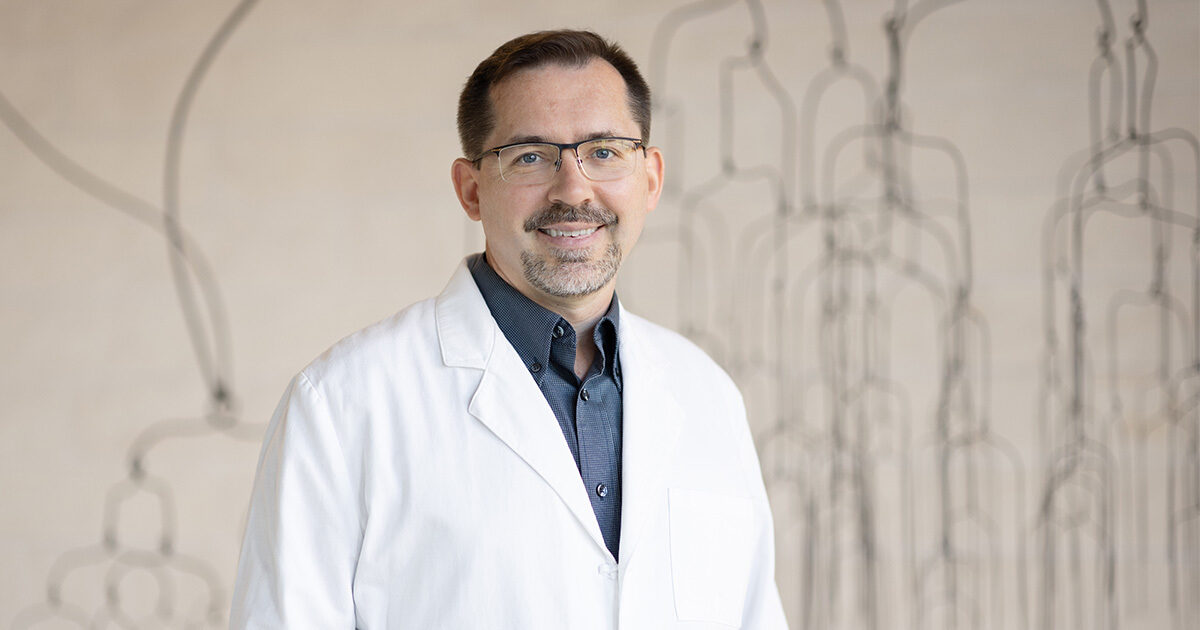
Leading the clinic is Jon Willie, M.D., Ph.D., a nationally recognized stereotactic and functional neurosurgeon with a track record of building high-performing programs at top institutions. As chief of functional neurosurgery at Dell Med, he specializes in restoring function for people with neurologic disorders like epilepsy, movement disorders and cerebral palsy.
Willie brings a suite of surgical options — including minimally invasive laser ablation and advanced neuromodulation techniques like deep brain stimulation and responsive neurostimulation — that many Central Texas patients have never had access to until now.
“Dr. Willie’s arrival and the launch of the Functional Neurosurgery Clinic mark a pivotal moment for neurosurgical care in Central Texas,” says David Paydarfar, M.D., board-certified neurologist and the director of UT Health Austin’s Mulva Clinic for the Neurosciences. “This program fills a gap in our region, offering patients access to innovative surgical treatments and collaborative, multidisciplinary care, all within an academic health system designed to accelerate progress. It’s a model for what exceptional care can and should look like.”
New tools for a new era
Epilepsy care has evolved dramatically over the last decade. “Even patients who were told in the past that they weren’t surgical candidates should be reevaluated,” Willie says. “Just at the time, someone didn’t have the tools or expertise to offer a path forward.”
One of the most game-changing tools he brings to UT Health Austin is laser interstitial thermal therapy, or LITT. Rather than removing large portions of brain tissue through open surgery, Willie and his team can now insert a tiny probe through a small incision, navigate to the seizure-causing region and ablate the tissue with pinpoint precision, all while the patient rests in an MRI scanner. Most patients go home the next day.
“It’s a major difference in recovery, risk and comfort,” Willie says, who helped pioneer the use of LITT in treating epilepsy more than a decade ago. “You can always take more brain later. You can’t put it back.”
For the patients who still need more
Not all seizures can be cured with surgery, but that doesn’t mean there’s no help. For patients with more complex or generalized epilepsy, neuromodulation therapies like DBS and RNS can offer life-changing improvements. These implanted devices don’t remove brain tissue; instead, they monitor and respond to seizure activity in real time, often reducing frequency and severity by more than 80%.
“They’re especially valuable for patients who aren’t candidates for resection, or who are risk-averse,” Willie explains. “They don’t burn bridges. And as the technology evolves, so does the therapy.”
Already, his team is exploring “closed-loop” devices that can read brain signals and respond with stimulation automatically, creating smarter, more adaptive care. “This is where the field is headed: not just controlling symptoms, but understanding and repairing the underlying circuits,” he says.
Meeting a regional need
As Austin continues to grow, so does the need for high-level neurological care. The Functional Neurosurgery Clinic is helping to meet that need by offering advanced, personalized treatment for patients who previously had to travel out of region or were told they had no options at all.
“Functional neurosurgery is integral to our ability to offer treatments beyond medications for neurologic disorders, including epilepsy,” says Andrew Lin, M.D., board-certified neurologist and assistant professor of medicine in Dell Med’s Department of Neurology. “These advanced treatments require a great deal of teamwork and collaboration, and having a team of experts locally is crucial for optimizing care and getting the best results for our patients. Dr. Willie brings a wealth of knowledge, experience, and expertise that helps us improve access to the highest level of care for complex neurologic conditions.”
For Willie, a native Texan who previously built programs at Emory and Washington University, the opportunity to return and help build something new in his home state was meaningful.
“This is coming home for me,” he says. “And it’s an opportunity to build something meaningful at a flagship university. In an academic setting, where we’re not just adopting technologies, but helping develop and improve them.”
At Dell Med and UT Health Austin, he’s found the team, the tools and the mission alignment to do just that. The result is a more personalized, forward-looking approach to care that meets patients where they are and opens the door to future advances.
“We’re at the beginning of something big,” Willie says. “This is the kind of place where patients should expect the best — not just eventually, but now.”