
Designing care around what matters most: Pulmonary support for neuromuscular conditions
Written by: Lily Vining
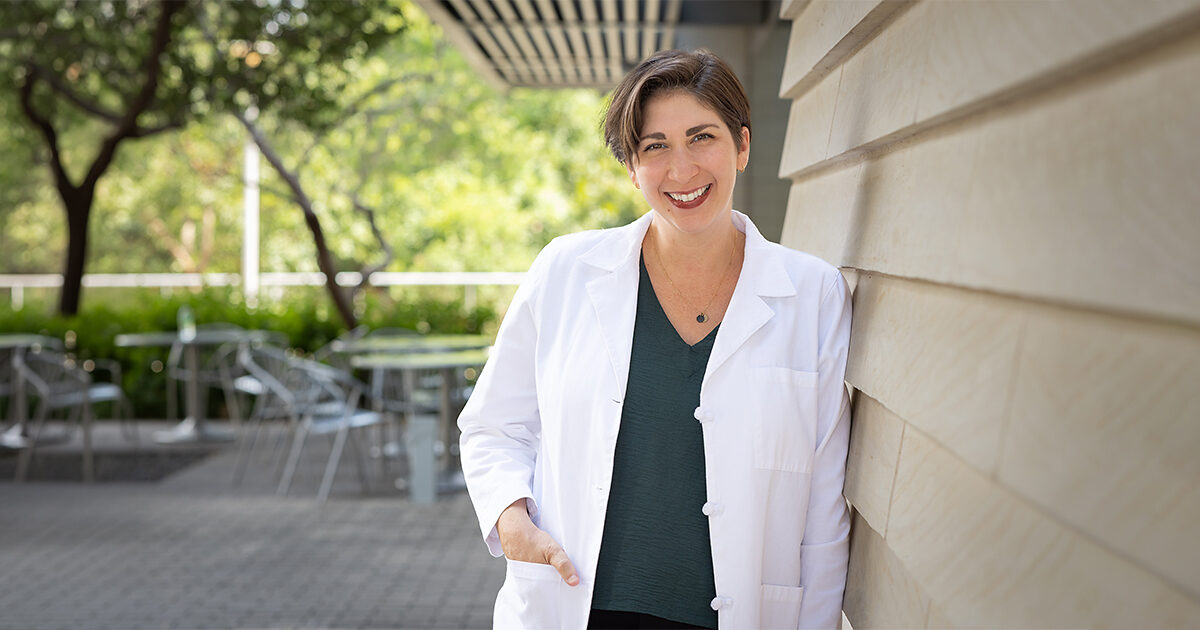
For some pulmonary patients, the diagnosis doesn’t start in the lungs, but in the muscles or nerves that control breathing. Elizabeth Rosenthal, M.D., focuses on patients at this critical intersection, helping Central Texans with neuromuscular disorders breathe a sigh of relief.
“These are patients where the diagnosis isn’t pulmonary. It’s a muscle problem or a nerve problem,” Rosenthal explains. “But the drivers of quality of life, the drivers of mortality, the drivers of hospitalizations — all of that is pulmonary.”
Her work centers on patients with conditions such as ALS, muscular dystrophy and spinal cord injuries. These diseases weaken the muscles required to breathe, cough and clear secretions. Without that function, patients are more vulnerable to infections and complications that lead to repeated hospital stays.
Pulmonary medicine, Rosenthal notes, has evolved to meet this complexity. As treatments have become more advanced, care has become more specialized, requiring physicians who focus deeply on specific patient populations.
For Rosenthal, that means managing the secondary symptoms of neuromuscular disease.
“I don’t necessarily need to know the exact diagnosis,” she says. “I manage the downstream effects of any condition that affects the respiratory muscles.”
A high-touch approach to complex care
Patients in Rosenthal’s office often require frequent monitoring, adjustments to care plans and coordination across specialties. Some are seen every few weeks as clinicians fine-tune ventilator settings or address new symptoms. Others, with more stable conditions, may return quarterly or annually.
Across that spectrum, one principle remains constant: access.
“I know my patients really well,” Rosenthal says. “We try to support people with same-day and virtual visits, getting them in when they need to be seen.”
This high-touch model reflects the reality of the population she serves. Many patients rely on medical equipment, navigate complex care needs and face a higher risk of hospitalization.
Her goal is both simple and deeply informed by patient experience.
“My number one job is to partner with patients and families in keeping them out of the hospital,” she says.
That focus is grounded in what matters most to patients: stability, independence and quality of life.
Academic medicine in action
As part of the University’s emerging academic health system, Rosenthal’s work extends beyond the clinic. It includes research, which is aimed at better understanding what patients need and how care can be designed to meet those needs more effectively.
In a recent qualitative study, Rosenthal and her team conducted interviews and surveys with patients in her clinic to better understand their experiences navigating the health care system.
“One of the biggest things that came up across the board was that patients want to stay out of the hospital,” she says.
The findings reinforced what she sees in practice every day and helped shape how care is delivered. Rather than building a clinic around traditional structures, Rosenthal emphasizes a model co-designed with patients.
“How do we design a clinic around you? How do we design the clinic around your needs and your priorities?” she says.
This approach reflects a broader strength of academic medicine. It allows clinicians to integrate research, clinical care and patient insight to continuously improve outcomes. It also supports longer visits, deeper relationships and more time to address complex challenges.
Care built around patients
The patients Rosenthal serves represent a wide range of diagnoses, needs and life circumstances. What they share is a reliance on coordinated, specialized care and a desire to live as fully and independently as possible.
“They’re incredible people,” she says. “They’re doing a lot, and they just need more infrastructure around them to be able to do what they want to do.”
At UT Health Austin, that infrastructure is built through collaboration between clinicians, respiratory therapists and other specialists, as well as a commitment to keeping patients at the center of every decision.
In a field where small changes can make a meaningful difference, that approach is helping redefine what pulmonary care can look like for patients with complex conditions.
For many, it starts with something fundamental: the ability to breathe, and to live beyond it.